Quick Facts
- Budget-conscious shoppers
- Tourists seeking authentic experiences
- Bargain hunters
- Sarojini Nagar is closed on Mondays - plan accordingly
- Start bargaining at 50% of the quoted price at Colaba Causeway
- Chandni Chowk main stretch is now pedestrianized 9AM-9PM for easier navigation
- Laad Bazaar is best visited between 5-9 PM when lights reflect off glasswork
Skip the malls and embrace India's chaotic flea markets for authentic shopping experiences. Master the art of bargaining, check closing days before visiting, and prepare for sensory overload rewarded with incredible deals.
If you stick to the glossy, air conditioned malls, you miss the point of shopping in India entirely. The real heartbeat of the country is found in its chaotic, noisy, and incredibly vibrant flea markets. This is where history, commerce, and a bit of madness collide.
But let’s be honest: navigating these bazaars requires street smarts. You need to know which days they are closed, where the “tourist prices” end, and where the real bargains begin. We aren’t just listing places; we are breaking down the logistics of the 14 most iconic markets in the country.
The Reality of Street Shopping in India
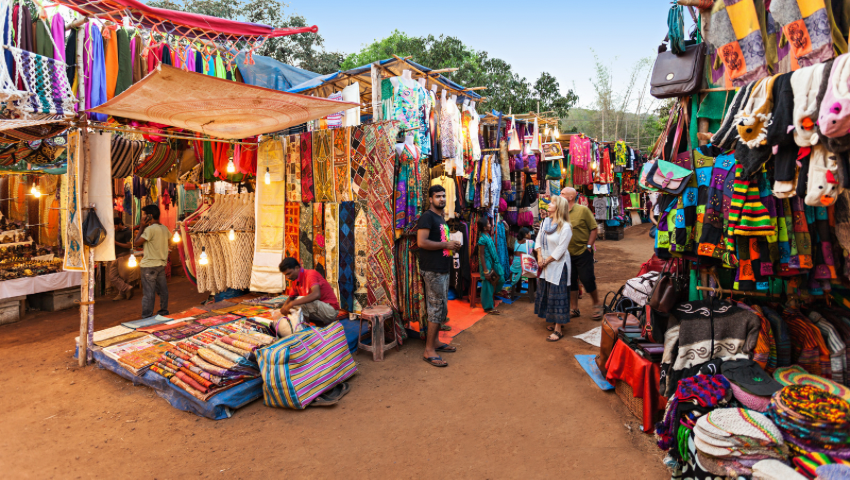
Shopping here isn’t a passive activity; it’s a contact sport. The sensory overload is realfrom the smell of roasting corn on the cob to the relentless honking of rickshaws. Whether you are in the narrow lanes of Delhi or the coastal pop ups of Goa, the rule is simple: never accept the first price.
If you enjoy this kind of raw energy, you might also find the Best 6 Flea Markets in Pakistan fascinating for a regional comparison, or see how the West handles the chaos in our guide to the Best Street Markets in the USA.
1. Colaba Causeway, Mumbai
The Vibe: The Gateway Drug for Tourists
Colaba is usually the first stop for anyone visiting Mumbai. Is it touristy? Absolutely. Is it worth it? Yes, if you bargain hard. Located a stone’s throw from the Gateway of India, this stretch is famous for junk jewelry, antique clocks, and brass knick knacks.
Practitioner’s Tip: Start your negotiation at 50% of the quoted price. If you walk away and they don’t call you back, you went too low. If they call you back immediately, you’re still paying too much.
2. Laad Bazaar, Hyderabad
The Vibe: A Bangle Avalanche
Tucked away in the narrow lanes near the historic Charminar, Laad Bazaar is a visual explosion of glitter. This market is the undisputed headquarters for traditional ‘lac’ (lacquer) and glass bangles.
While the shops are open from 11:00 AM to 11:00 PM, the real magic happens in the evening between 5:00 PM and 9:00 PM when the lights reflect off the glasswork. It’s crowded, it’s loud, and it’s visually stunning.
3. Chandni Chowk, Delhi
The Vibe: Organized Chaos (Now Pedestrianized)
Chandni Chowk has been the commercial soul of Old Delhi for over three centuries. Recently, the area has undergone a massive facelift. The main stretch from Lal Jain Mandir to Fatehpuri Masjid is now pedestrianized between 9:00 AM and 9:00 PM, making it much easier to navigate without dodging traffic.
Dive into the specialized lanes: Dariba Kalan for silver jewelry and Moti Bazaar for shawls and pearls. Just remember that while the main road is cleaner, the inner lanes remain a labyrinth.
4. Sarojini Nagar Market, Delhi
The Vibe: The Fast Fashion Capital
If you see someone wearing a trendy top in Delhi, there is a 90% chance it came from “SN.” Sarojini Nagar is famous for export surplusbranded clothes that were rejected for minor defects (often invisible to the naked eye) and sold for a fraction of the retail price.
- Timing: 10:00 AM to 9:00 PM.
- Critical Info: The market is closed on Mondays. Do not show up on Monday expecting to shop; you will only find disappointment and closed shutters.
5. Janpath Market, Delhi
The Vibe: Curated Street Style
Janpath is often called the “boutique” version of Sarojini. Stretching 1.5 km from Connaught Place to Windsor Place, it offers a mix of Tibetan curios, Gujarati textiles, and fast fashion.
It is slightly pricier than Sarojini, but the curation is better, meaning you have to dig less to find gold. Note that while the street stalls buzz all week, many sections observe a break on Sundays.
6. Khan Market, Delhi
The Vibe: Luxury in Disguise
Let’s correct a common misconception: Khan Market is not a flea market in the traditional sense. In fact, as of 2025, it ranks as the 24th most expensive retail street globally, with rents hitting USD 223 per square foot.
Established in 1951 for refugees from the North West Frontier Province, it has morphed into India’s poshest high street. Come here for high-end designer labels, excellent bookshops, and premium cafes. If you are looking for ₹100 t shirts, you are in the wrong zip code.
7. Chennai: Pallavaram Friday Market (Not Greams Road)
The Vibe: The Real Deal
Many old guidebooks mistakenly list Greams Road as a flea market. Ignore them. Greams Road is a corporate hub known for Apollo Hospitals. If you want a true flea market experience in Chennai, you go to the Pallavaram Friday Market.
This is a gritty, authentic market dealing in everything from seedlings and old electronics to furniture. It’s far less polished than the tourist traps, which makes it infinitely more interesting for the serious treasure hunter.
8. Ravivari Bazar, Ahmedabad
The Vibe: 600 Years of History
Also known as Gujari Bazar, this market on the Sabarmati Riverfront isn’t just a place to shop; it’s a living museum. Established by Sultan Ahmed Shah in 1414, it has been running for over 600 years.
Every Sunday, traders spread out over 32,000 square meters to sell absolutely everythingfrom antique farm tools to second-hand furniture. It is raw, dusty, and utterly fascinating.
9. Anjuna Flea Market, Goa
The Vibe: The Hippie Trail Legacy
Started decades ago by hippies selling their possessions to fund their return tickets home, Anjuna has become a massive commercial entity.
It operates strictly on Wednesdays during the tourist season (October to April). While it has become more commercialized, it’s still the best place to find Tibetan singing bowls, intricate macramé, and beachwear. The market winds down by sunset, so arrive by 4:00 PM to catch the golden hour vibe.
10. Johari Bazaar, Jaipur
The Vibe: Gemstone Heaven
Jaipur is the gemstone capital of India, and Johari Bazaar is its showroom. This isn’t just about cheap trinkets; you can find serious precious and semi precious stones here. Be careful with authenticity if you aren’t an expertstick to reputable shops for expensive purchases and use the street stalls for fun, costume jewelry.
11. Ima Market, Manipur
The Vibe: The Mother’s Market
Ima Keithel in Imphal is unique globally. It is the largest all women market in the world, a tradition that dates back to the 16th century (est. 1533).
Between 5,000 and 6,000 licensed women traders run the show here daily. It’s not just a market; it’s the socio political heart of Manipur. You come here for hand woven shawls, dried fish, and to witness a powerful 500-year old matriarchal tradition in action.
12. Sunday Bazaar, Bangalore
The Vibe: The Early Bird’s Goldmine
This is not for the lazy. Located in the Chickpet/Old Tharagupet area, the Sunday Bazaar kicks off at 4:00 AM and wraps up by evening.
Why go so early? To get the best picks of second-hand electronics, gym equipment, and branded surplus shoes before the resellers grab them. It’s messy and crowded, but you can find laptops for ₹1000 and vintage typewriters if you dig deep enough.
For those interested in wholesale dynamics in other Asian hubs, check out our guides to Wholesale Markets in Singapore and Hong Kong.
13. New Market, Kolkata
The Vibe: The Gothic Labyrinth
Surviving fires and changing eras, the red brick gothic structure of New Market (formerly Sir Stuart Hogg Market) is an institution. Inside, over 2,000 stalls form a maze where you can buy Jewish cheese, silver jewelry, and cheap clothing all within a 100-meter radius. Warning: The touts here are aggressive. Walk with purpose.
14. Arpora Saturday Night Market, Goa
The Vibe: The Party Market
If Anjuna is for the day, Arpora is for the night. Operating every Saturday from 6:00 PM to 1:00 AM (November to April), this is as much a festival as it is a market.
Located in the foothills of Arpora, it features live music stages, global food stalls, and higher quality boutiques than the beach markets. It’s the perfect place to grab a beer, listen to a live band, and shop for designer led resort wear.